First Appearance Court
In Broward County, First Appearance Court hearings typically occur within 24 hours of a defendant’s arrest. On weekdays (Monday to Friday), defendants scheduled for the morning docket appear at the First Appearance hearing at 9 a.m., while defendants scheduled for the afternoon docket appear at the First Appearance hearing at 12:30 p.m. We have varying start times during weekends and holidays, but we generally begin by 8:30 a.m.
Victims of a crime have the right to be present at First Appearance Court and to notify the judge of their views regarding the defendant’s release from custody before trial.
If you wish to appear and address the Court, you may appear via Zoom by clicking here. The meeting ID number is 620-446-048. It is important to mute your audio and that your camera is off until your case is called. If you plan to address the Court, you will be required to turn on your camera at that time. Please keep your camera off and microphone muted until you are asked to speak. Prior to entry into the Zoom session, please ensure you have reviewed and are in compliance with the First Appearance Division Procedures by visiting: https://bit.ly/DIVMN Please note “iPhone or Android” or phone numbers as display names will delay entry into the Zoom Hearing. Please ensure you have a name listed (i.e., “J Doe. John Doe, etc.) to avoid delayed entrance.
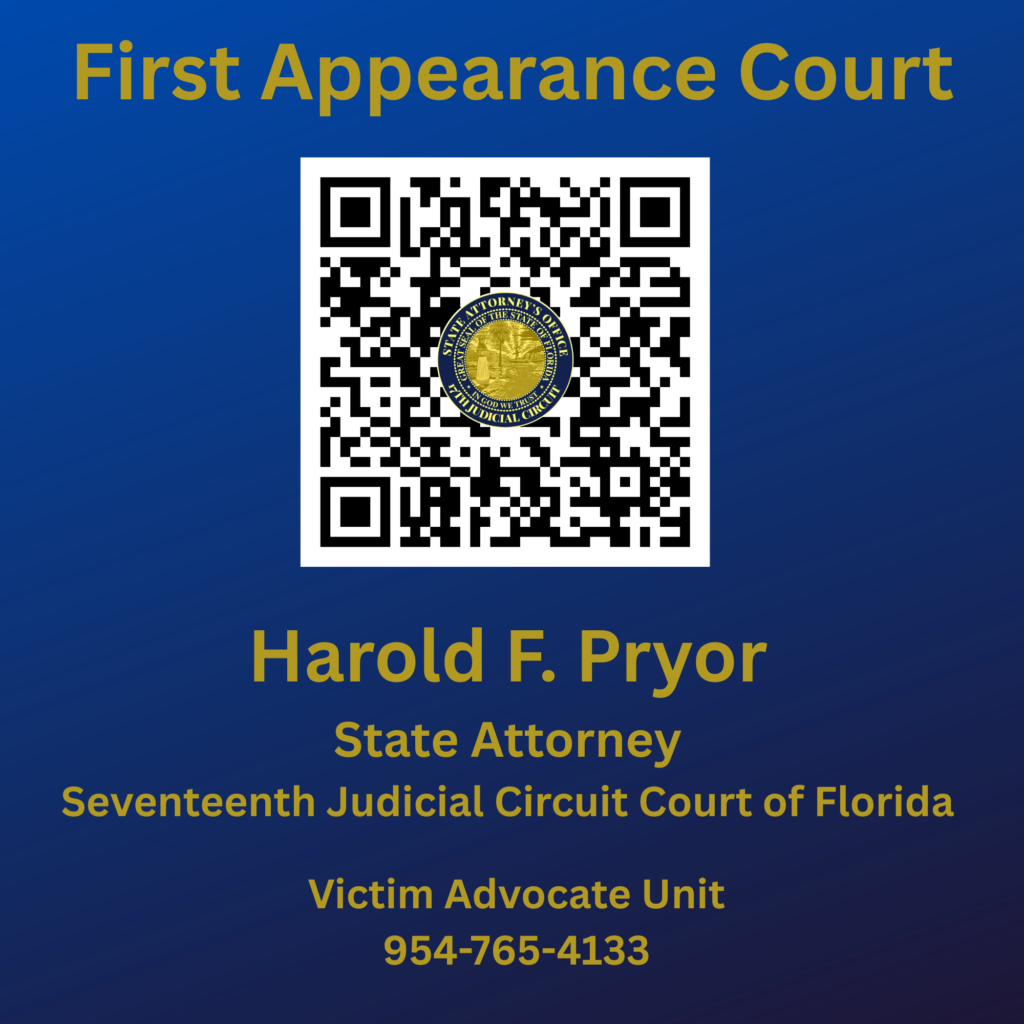
If you wish to appear in person and address the Court, you may visit the Broward County Main Courthouse at 201 SE 6th Street, Fort Lauderdale, FL 33301 Courtroom # 04155 (West Wing).
If you need additional information or help, please contact the Broward State Attorney’s Office Victim Advocate Unit at 954-765-4133.
It is important to note that any request to drop the charges / request to waive prosecution will NOT be addressed during First Appearance Court. You must contact the State Attorney’s Victim Advocate Unit to obtain information regarding Waiver of Prosecution instructions.
After the First Appearance hearing, for victims of Domestic Violence, whether you appear in person, via Zoom, or not at all, the Victim Advocate Unit will attempt to contact you to provide you with the First Appearance outcomes, review victims’ rights, explain the criminal justice process, provide community resources, and discuss safety planning.